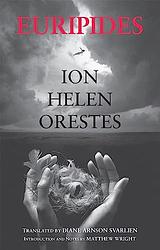
"Ion" is a classical Greek tragedy that revolves around themes of identity, fate, and the complexities of family relationships. The play tells the story of a young man, Ion, who serves as an attendant at the temple of Apollo in Delphi. Unbeknownst to him, he is the son of Apollo and Creusa, the queen of Athens. Creusa, having been raped by Apollo and believing her child was dead, comes to the temple seeking answers about her lost son. A series of oracular revelations and dramatic encounters eventually lead to the recognition and reunion of mother and son. The play explores the intervention of the gods in human lives, the nature of legitimacy and inheritance, and the reconciliation of past trauma with present joy.
The 10781st greatest book of all time
Euripides (Greek: Ευριπίδης) (ca. 480 BC–406 BC) was a tragedian of classical Athens. Along with Aeschylus and Sophocles, he is one of the three ancient Greek tragedians for whom any plays have survived in full. Some ancient scholars attributed ninety-five plays to him, but the Suda says it was ninety-two at most. Of these, eighteen or nineteen have survived more or less complete (Rhesus is suspect). There are many fragments (some substantial) of most of his other plays. More of his plays ha…
Read more