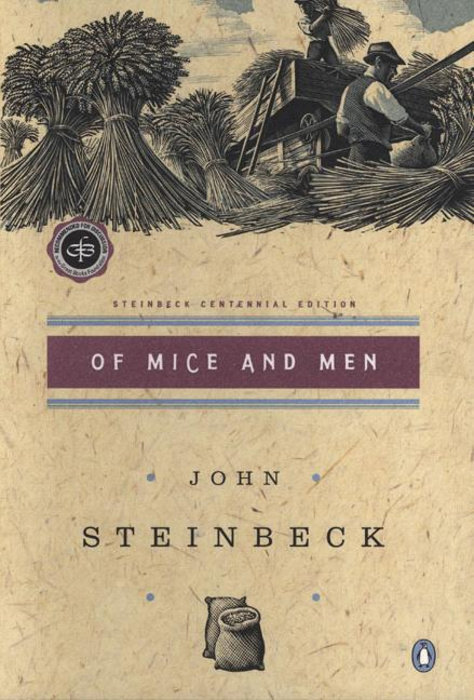
| Book name: | Of Mice and Men (2024) |
| Category: | Fiction |
| Author: | John Steinbeck |
| Pages: | 107 pages |
| ISBN13: | 0142000671 |
| ISBN: | 0142000671 |
| Language: | English |
| Publication data: | Jan. 1, 2002, 8 a.m. |
Of Mice and Men is an iconic novella by the acclaimed American author John Steinbeck, published in 1937. Set during the Great Depression, the story explores the themes of friendship, dreams, loneliness, and sacrifice. Steinbeck’s poignant narrative offers a window into the lives of the itinerant workers of California during this tumultuous period.
The story centers on two displaced ranch workers, George Milton and Lennie Small, who travel together seeking employment opportunities. Despite their contrasting personalities and physiques—George being small and astute, while Lennie is large and mentally disabled—they share a firm bond, symbolizing hope and companionship amidst the relentless backdrop of the American economic downturn.
Steinbeck’s choice to create characters like George and Lennie encapsulates the harsh realities and transient nature of the American Dream during the era. Their shared dream of owning a piece of land and “living off the fatta the lan’” is a recurring motif that highlights the hope and aspiration that drives them despite numerous challenges. Yet, fate intertwines with their pursuits as Lennie's unintentional destructive actions continuously put their dreams at risk.
One of the main themes Steinbeck explores is friendship and isolation. Through the relationship between George and Lennie, readers explore the scope of loyalty and sacrifice. George's protective nature over Lennie illustrates a profound commitment, emphasizing themes of caretaking and responsibility. On the other hand, characters such as Candy and Crooks introduce the element of loneliness experienced by marginalized individuals. Their interactions with others on the ranch provide a deeper understanding of solitude as an undercurrent within the narrative.
The significance of dreams in the novella is another key focus. Each character harbors personal dreams that symbolize broader yearning for a better life, yet Steinbeck deftly highlights the fragility of these aspirations. For George and Lennie, and other characters like Candy and Curley's Wife, dreams offer solace and direction, yet are persistently threatened by the relentless adversities of their environment.
The novella also tactfully handles more complex social issues such as prejudice and injustice, deeply reflective of the 1930s American society. The character of Crooks, for instance, provides insight into racial discrimination, while the silent struggles of Curley's Wife explore gender dynamics and the suffocating reality of limited freedoms for women during that era.
Steinbeck’s detailed portrayal of the ranch workers' lives offers a visceral experience into the essence of human ambition and the inherent dignity within the struggle for betterment. His masterful use of dialogue and setting vividly encapsulates the essence of the time, ensuring that each scene reverberates with authenticity and subtle complexity.
The novella’s tragic conclusion delivers a powerful statement on the harshness of reality, cementing its legacy as a timeless narrative on human existence. The lasting impact of 'Of Mice and Men' is seen in its enduring relevance and its ability to evoke empathy and reflection. Those who engage with this poignant story are inevitably touched by its examination of dreams and disillusionment, cultivating a lingering appreciation for Steinbeck's literary craft.
Through its profound storytelling and its exploration of human vulnerability, 'Of Mice and Men' remains an essential read for anyone interested in the rich tapestry of human experience, highlighting the complexity of dreams and the universal broth of friendship amidst adversity.