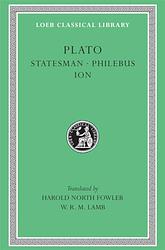
The dialogue explores the nature of the good life, examining the roles of pleasure and intellect in achieving the highest form of happiness. Through a conversation between Socrates, Philebus, and Protarchus, the text delves into the complexities of human experience, debating whether pleasure or wisdom holds greater value. Socrates argues for a balanced life where intellect and reason guide pleasures, ultimately suggesting that a harmonious blend of both leads to true fulfillment. The discussion highlights the importance of measure, proportion, and the integration of diverse elements in the pursuit of the good life.
Plato (Greek: Πλάτων), born Aristocles (c. 427 – 348 BC), was an ancient Greek philosopher of the Classical period who is considered a foundational thinker in Western philosophy and an innovator of the written dialogue and dialectic forms. He raised problems for what became all the major areas of both theoretical philosophy and practical philosophy, and was the founder of the Platonic Academy, a philosophical school in Athens where Plato taught the doctrines that would later become known as Pl…
Read more