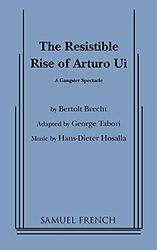
"The Resistible Rise of Arturo Ui" is a satirical play that uses the rise of a fictional 1930s Chicago mobster, Arturo Ui, to parallel the rise of Adolf Hitler in Nazi Germany. The narrative is a critique of those who allowed Hitler to come to power, emphasizing that his rise was indeed resistible. The play explores themes of power, corruption, manipulation, and the dangers of complacency, showcasing the destructive potential of unchecked ambition and the failure of society to prevent the ascent of dangerous individuals.
The 2384th greatest book of all time
Eugen Berthold Friedrich Brecht was a German poet, playwright, and theatre director. A seminal theatre practitioner of the twentieth century, Brecht made equally significant contributions to dramaturgy and theatrical production, the latter particularly through the seismic impact of the tours undertaken by the Berliner Ensemble—the post-war theatre company operated by Brecht and his wife and long-time collaborator, the actress Helene Weigel—with its internationally acclaimed productions.