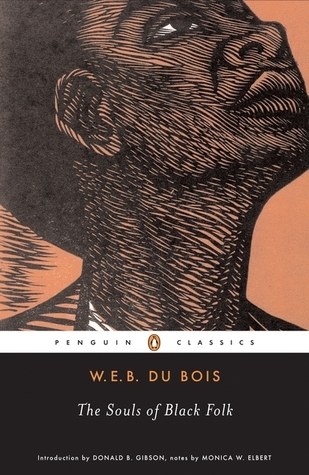
This landmark book is a founding work in the literature of black protest. W. E. B. Du Bois (1868–1963) played a key role in developing the strategy and program that dominated early 20th-century black protest in America. In this collection of essays, first published together in 1903, he eloquently affirms that it is beneath the dignity of a human being to beg for those rights that belong inherently to all mankind. He also charges that the strategy of accommodation to white supremacy advanced by Booker T. Washington, then the most influential black leader in America, would only serve to perpetuate black oppression. Publication of The Souls of Black Folk was a dramatic event that helped to polarize black leaders into two groups: the more conservative followers of Washington and the more radical supporters of aggressive protest. Its influence cannot be overstated. It is essential reading for everyone interested in African-American history and the struggle for civil rights in America.
In 1868, William Edward Burghardt Du Bois (pronounced 'doo-boyz') was born in Massachusetts. He attended Fisk College in Nashville, then earned his BA in 1890 and his MS in 1891 from Harvard. Du Bois studied at the University of Berlin, then earned his doctorate in history from Harvard in 1894. He taught economics and history at Atlanta University from 1897-1910. The Souls of Black Folk (1903) made his name, in which he urged black Americans to stand up for their educational and economic rights…
Read more