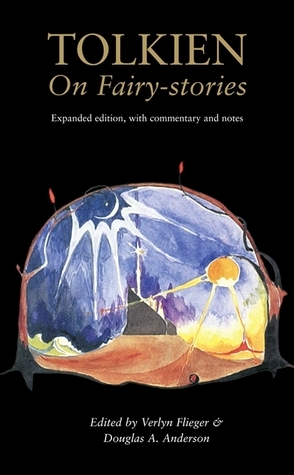
| Book name: | Tolkien On Fairy-stories (2024) |
| Category: | Fantasy |
| Author: | J.R.R. Tolkien |
| Pages: | 320 pages |
| ISBN13: | 0007244665 |
| ISBN: | 0007244665 |
| Language: | English |
| Publication data: | July 1, 2008, 7 a.m. |
Tolkien On Fairy-stories is a remarkable exploration of the art and relevance of fairy stories by the legendary author J.R.R. Tolkien, widely renowned as the creator of The Lord of the Rings and The Hobbit. This insightful work was initially a lecture given by Tolkien in 1939, which was later expanded into an essay that delves deep into the nature of fairy tales and their immense value.
In the introduction, Tolkien addresses the common misconceptions surrounding fairy stories and argues against the dismissal of these as mere fanciful tales for children. His passion for mythology and folklore is evident as he ardently defends the importance of fairy stories, elaborating on how they hold deeper meanings and universal truths that transcend the simplistic notion of being child's play. Through his scholarly yet accessible style, Tolkien invites readers to view fairy tales as a significant cultural force capable of depicting profound human experiences.
The work is structured around several main themes, most notably the concept of the "secondary world," which is central to the creation of effective fairy stories. Tolkien posits that a successful fairy story establishes a coherent secondary world with its own rules and logic, allowing readers to immerse themselves fully and willingly suspend disbelief. This theme is crucial in understanding Tolkien's own approach to world-building in his beloved fantasy novels.
Another key theme discussed is the idea of "sub-creation." Tolkien elaborates on the role of the author as a sub-creator, crafting new worlds and narratives that enrich the primary world with beauty and imagination. His thoughts on sub-creation highlight the creative power and responsibility of the storyteller, emphasizing how fairy stories contribute to the greater tapestry of human culture and knowledge.
In his essay, Tolkien also touches upon the significance of escape, consolation, and recovery as fundamental elements of fairy stories. He argues that fairy stories offer an essential escape from the mundane constraints of everyday life, providing relief and solace through the enchantment and wonder they inspire. This escapism is not mere avoidance but a way to regain perspective on reality, seen through the lens of fairy stories.
Moreover, the notion of recovery is vital, as Tolkien believes that fairy stories help readers rediscover joy and wonder in the familiar world. By unveiling the extraordinary within the ordinary, fairy stories encourage a renewed appreciation of the beauty and magic around us. This concept resonates deeply with Tolkien's own narrative style, characterized by his ability to interweave elements of the mythical and the everyday seamlessly.
The essay concludes by emphasizing the enduring appeal and relevance of fairy stories. Tolkien passionately advocates for their role in literature, urging readers to embrace the joy and wisdom these tales offer. His insights have profoundly influenced the way fairy stories are perceived, cementing their status as essential components of literary tradition.
Overall, Tolkien On Fairy-stories is a compelling work that reflects Tolkien's profound understanding of narrative and myth. It is a testament to his belief in the power of storytelling to shape our perception of the world, enhancing both readers' personal and intellectual engagement with literature. This essay is a must-read for anyone interested in fantasy, storytelling, and the intricate craftsmanship of one of the greatest literary minds of the 20th century.